1000XRESIST [REVIEW]: An Experience That Remains
In a world dictated by fast algorithms and 24/7 news cycles we sometimes find ourselves unable to sit in the quiet and uncomfortable. Playing 1000XRESIST forced me to sit in those moments, and through this game dictated by dialogue and the choices you make, I managed to find a world and a story that not only moved me beyond all measure, but has stuck with me long after the credits rolled.

1000XRESIST is a 2024 Game By Sunset Visitor which became my GOTY for 2025 and I haven’t stopped thinking about it since I put the controller down.
It’s hard to describe this game without getting into spoilers as this is a game where you truly will experience the most out of it with the less that you know. But I will say this if you are a fan of the themes found in Everything Everywhere All At Once, the mystery and choice factor of Life Is Strange mixed with a little bit of Sci-Fi then this is the game for you. Oh you also want to be a fan of the slow burn type of games which rely on dialogue rather than combat to move the game forward.
Alright, now for those who have not played the game and wish to now would be the time to click away from this article and finish playing the game, because the rest of this review will now be spoiler filled.
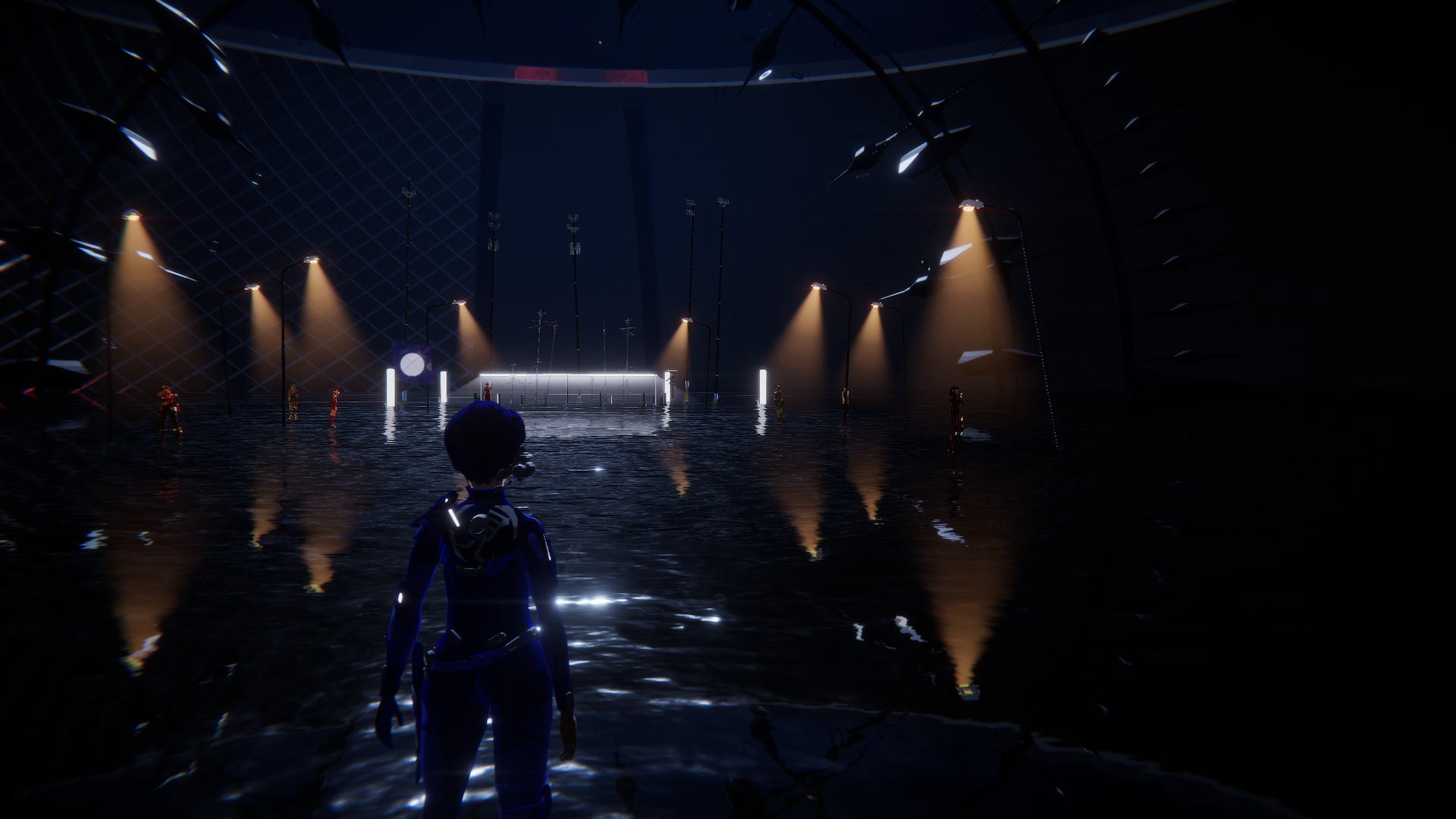
1000XRESIST throws you into the deep end from the word go, and you will feel lost and confused, but if you stick with the game you will be sent on a jouney that explores what it means to be human. (Image Credit: 1000XREST/Sunset Visitor)
You begin your journey as Watcher a clone who lives in the Orchard, an isolated society of clones underground ruled by the ALLMOTHER. An unknown virus has wiped out the rest of humanity and aliens known as the Occupants have taken over, with the ALLMOTHER being the only one that remained. Watcher alongside her ‘sisters’ Knower, Bang Bang Fire, Healer, Fixer and Principle, explores the past of the ALLMOTHER (a.k.a. Iris) through communions, a process in which they delve into Iris’ memories spanning decades to try and grasp what life was like for her before the virus and occupants.
What I loved about each of these characters was how they caused Watcher (and me) to see the world in a different light with each interaction. Whether they be pushing for her to learn more about the past, challenging her preconcieved notions of the ALLMOTHER or even asking deep introspective questions about what it means to be human. Each character was fun, engaging and the further I got along in the game the more I could resonate with aspects of each of them, their flaws (of which there are many) is what made them so human.
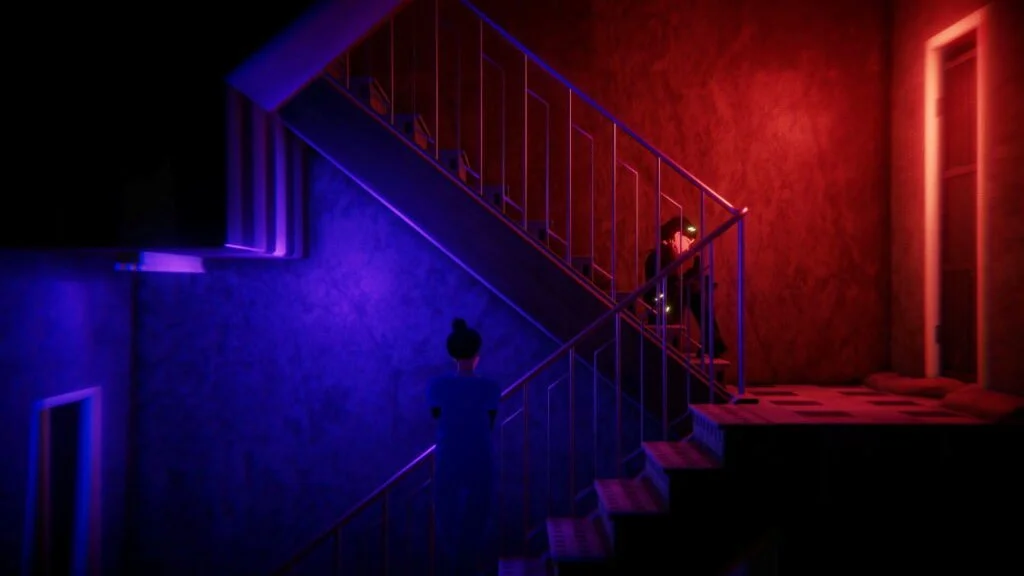
Where 1000XRESIST really shines is through its exploration of generational trauma, there are so many little moments between Iris and her parents (her mother in particular) where no words are said but the impact cuts you like a knife.
The heaviest but most impactful moments in this game for me was when we explored the connection between Iris a second generation immigrant and her parents first generation immigrants that immigrated to Canada after they fled Hong Kong following the 2019 protests. There were so many little moments that I could heavily resonate with as the daughter of an immigrant who had experienced occupation, and sometimes the most powerful moments were in the unsaid moments where the swelling score and montages could speak for themselves.
“I cannot think of another game that executes these themes to the level of finesse that 1000XRESIST did, for a game that does rely on such heavy dialogue, it is amazing how the most impactful moments were the ones where nothing was said at all.”
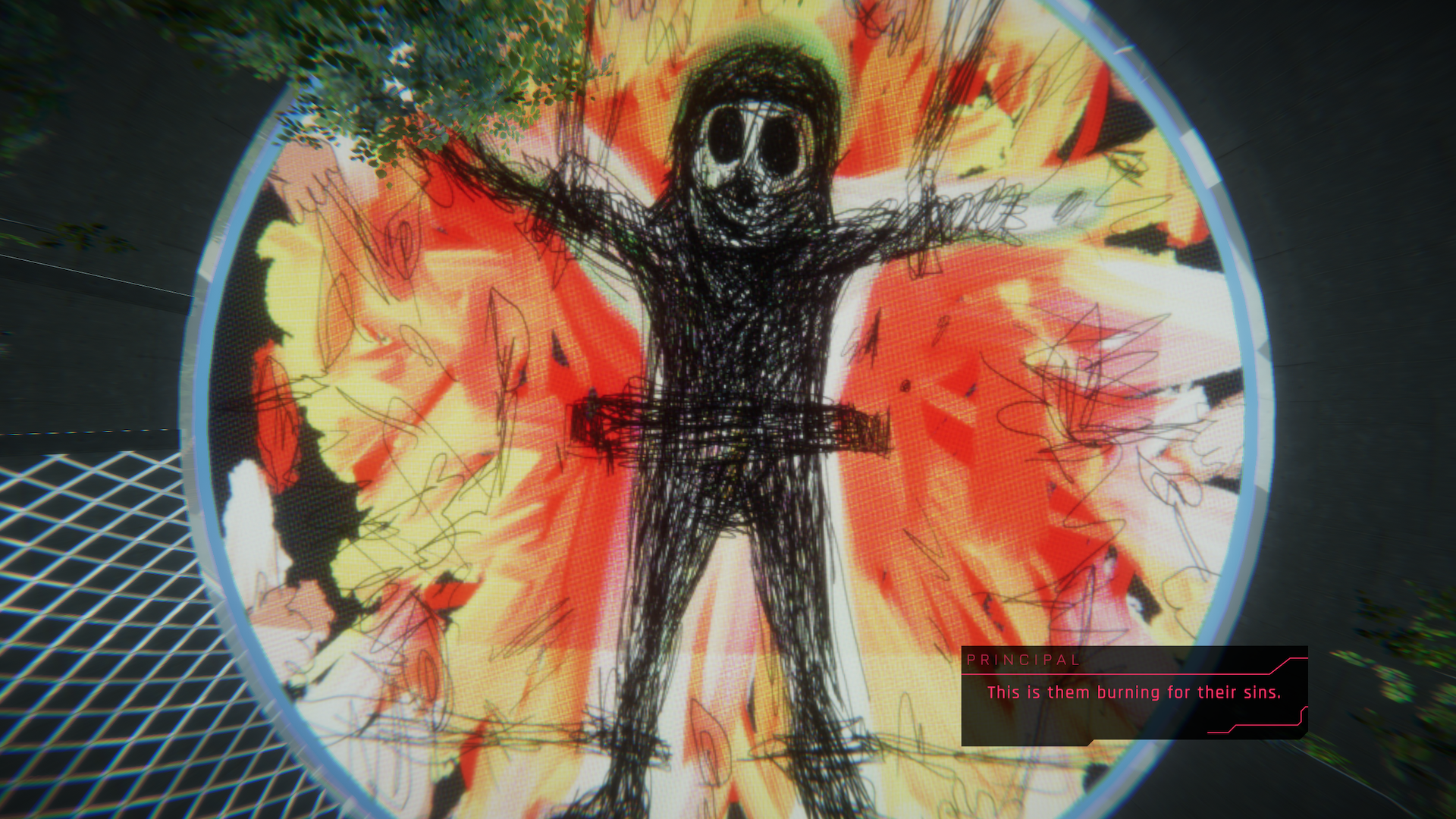
Like all good narratives set in a utopic futuristic world, not everything is as it seems (Image Credit: 1000XRESIST/Sunset Visitor)
The moment I knew 1000XRESIST became my Game of the Year was when the game took everything you thought you knew about this world and these characters, which you had spent the last few hours (or days in my case) with and flipping it on its head. You reach a penultimate moment in the game in which you kill Iris but not before learning of the things she did to her friends, her family or even the clones she helped raise, showing once more how much her generational trauma is intertwined through her every interaction.
Prior to Iris’ death it is revealed that one of the original clones that Iris made called was Youngest, however due to a mistake she made Iris punished her and the rest of the sisters were stripped from the immunity which had been provided to them and Youngest was forced to make clones which would reach the levels of perfection which she could not attain to. It is following Iris’ death that you come to realise that Principle was in fact Youngest the whole time, and following Iris’ death Principle takes her place as the new leader as the head of the newly formed Provisional Government.
It is at this moment that the opening credits roll again except this time something is slightly different and instead of controlling Watcher as the main protaganist you are now Blue a miscellaneous clone who lives in the old town below the Orchard who has been tasked to end the Provisional Government once and for all.
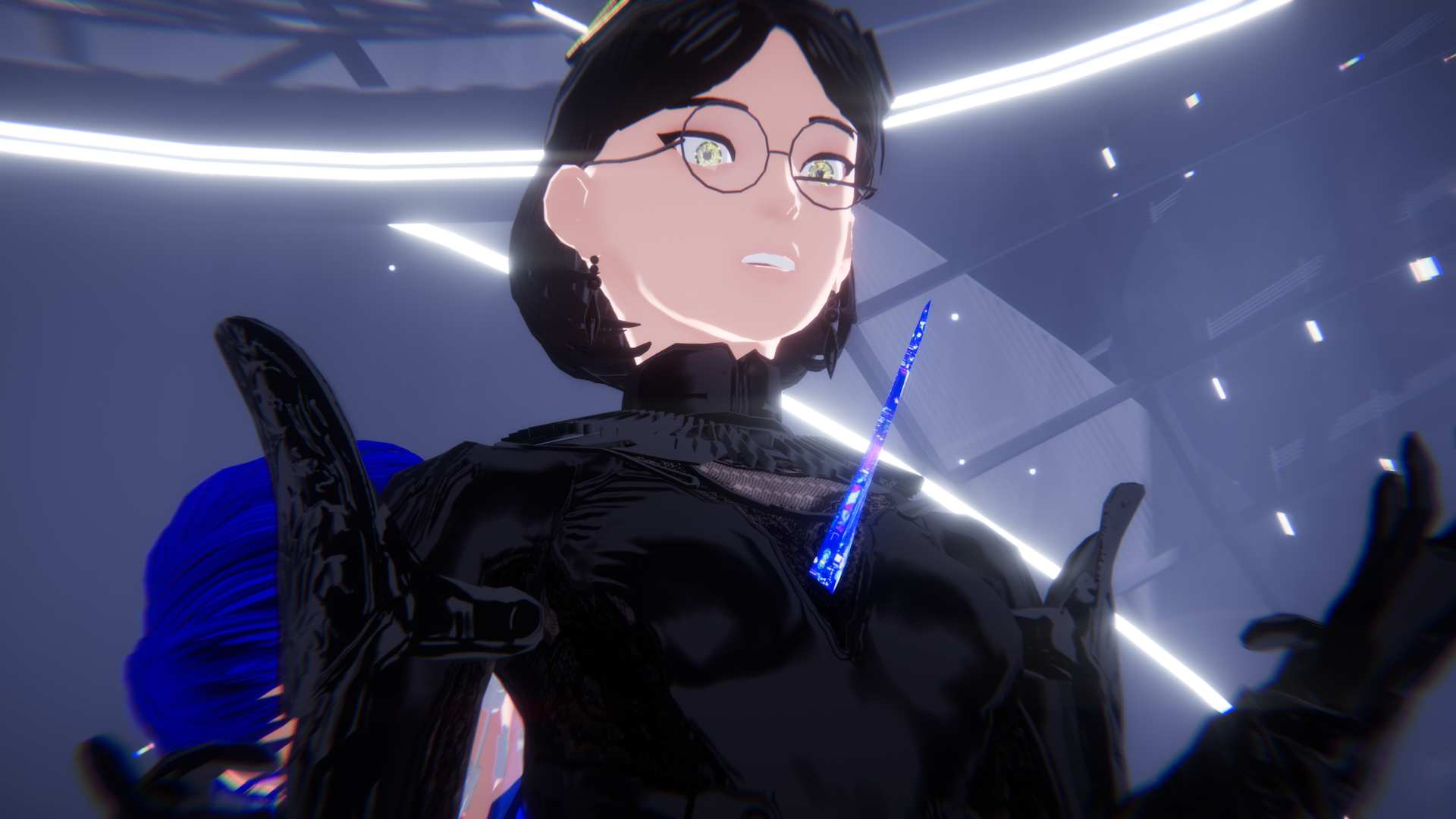
The game lures you into a false sense of security that following Iris’ death all will be well, but as history shows us the end of one regime usually means there’s another ready in the wings to take its place (Image Credit: 1000XRESIST/Sunset Visitor)
It is in these last few chapters that solidified 1000XRESIST as one of my favourite games of all time, the intersecting of stories and experiences spanning generations was nothing short of a work of art. There were genuine times throughout my playthrough where I needed to pause mid game and just sob profusely because scene after scene just felt like a gut punch every single time.
There are paticular scenes especially with Iris’ father that I continue to think about, even while writing this. How Sunset Visitor managed to tackle the deeply complex theme of suicide but do it in a way that was not traumatising but instead deeply moving is something that more games should take a note of.
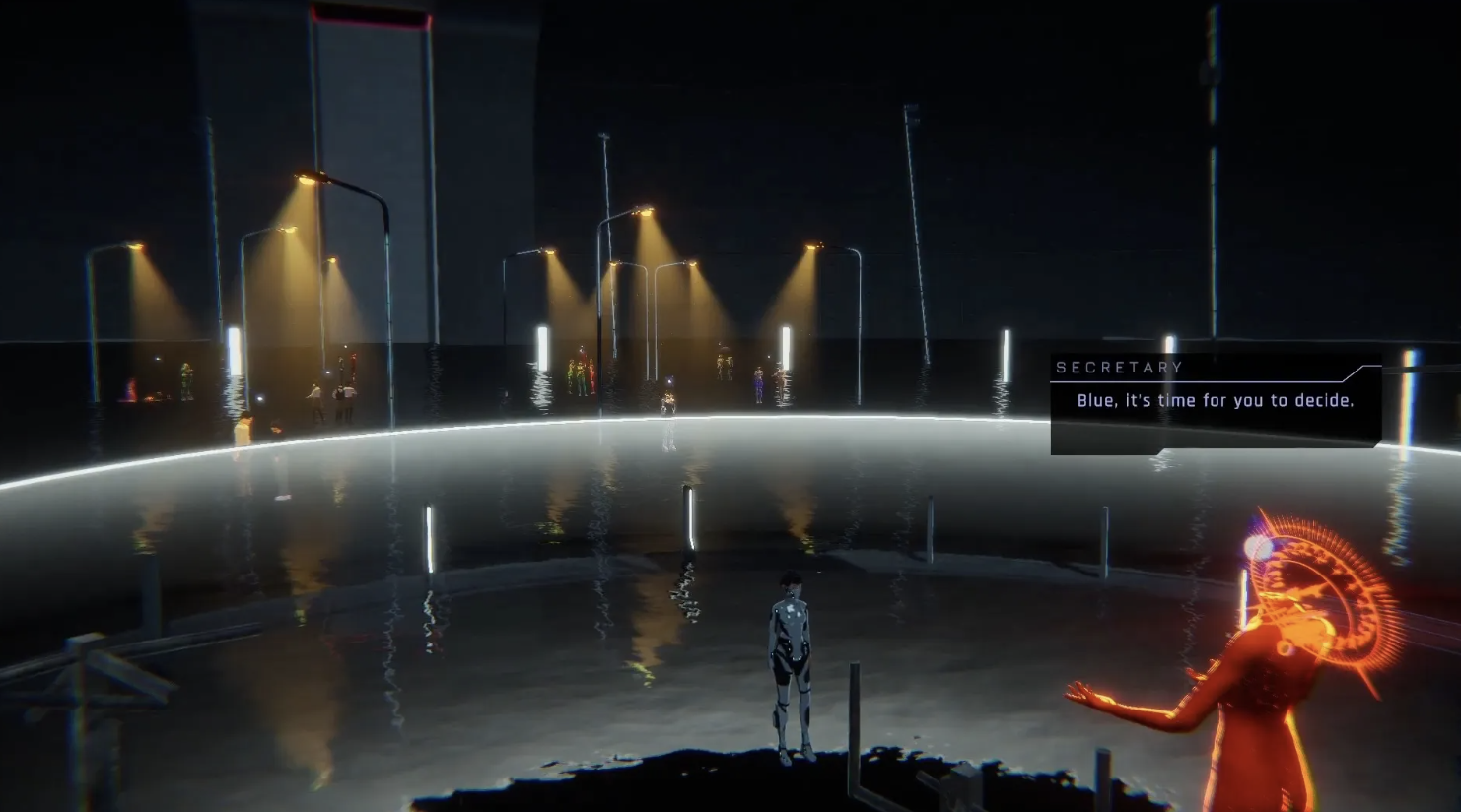
In the final moments of the game you have the ability to create a new world but as you go around deciding what stays and what goes you realise the world and these characters are not as black and white as you once thought. (Image Credit: 1000XRESIST/Sunset Visitor)
About halfway through the game I knew that I would have to make a choice, I wasn’t sure what that choice would be and how it would impact the game but there was a little thought in the back of my head which compared this game to Life Is Strange which I couldn’t get rid of.
So the time came, I had to make the penultimate choice. What elements of this society would I keep for this new future and what would I erase. On the surface it seemed like a pretty easy choice, overthrow the dictator and all that support her… right?
I spent probably half an hour, maybe more contemplating and putting together different combinations of each society. Could I bring myself to forgive a person who had so much done wrong to her that she in turn wronged others? Or what about religion, could I force people to be punished for subscribing to a religion, even if that relgion can and will hurt others in the process?
The hardest decision I had to make was when I had to decide on whether to keep the anger, hurt and resentment which had been passed down through generations. These emotions and memories were fundamental to each character I had grown to know and love, they defined who they were, and yet it was these same emotions which kept them trapped, stuck in their ways, never able to move forward.
These are the deep moral questions 1000XRESIST forced me to grapple with, and honestly I’m not sure if I did make the right choice. On another playthrough I could see myself choosing different ideologies to preserve or erase. By refusing a black and white framework, the game forced me to reckon with reality’s many shades of grey.
